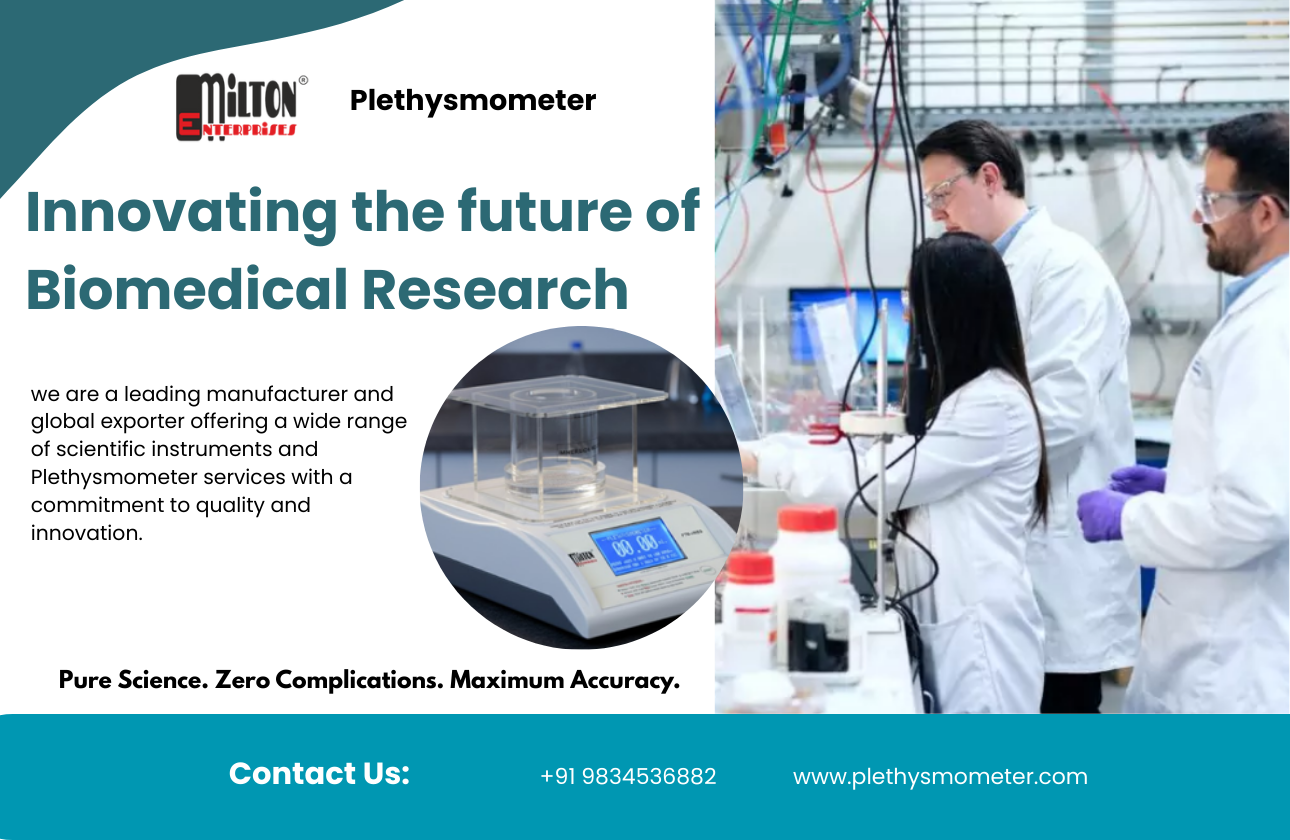
Plethysmometer for Research
A plethysmometer is an essential tool in research, particularly for measuring changes in volume within an organ or a whole body. This instrument uses the principle of water displacement or air pressure changes to detect volume shifts, often in small laboratory animals. Researchers use plethysmometers to study inflammation and the effects of different medications. It is a critical piece of equipment when the goal is to gather accurate and reliable data. The results can help in understanding physiological changes in tissues, closely mirroring real-life scenarios. Whether it's animal research or clinical studies, a plethysmometer provides invaluable insights, making it a cornerstone of biomedical research today.
Plethysmometer for Research & Lab Use
In laboratory settings, plethysmometers are indispensable. They offer detailed observations that are crucial for scientific discoveries. A typical research lab that focuses on disease studies, such as arthritis, erythema, or tumor growth, heavily relies on this device. Research laboratories frequently use plethysmometers to perform precise measurements on rodents. These measurements help in formulating potential interventions or tracking the progress of a disease over time. Additionally, they allow researchers to validate the effectiveness of new drugs, which is vital for scientific validation. This utility in lab use underscores the plethysmometer's role as a trusted instrument in the scientific community.
Plethysmometer for Research Laboratories
In research laboratories, accuracy and precision are paramount, making advanced equipment like the plethysmometer essential. It aids researchers in navigating through complex processes with precision. Digital plethysmometer models offer enhanced measurement capabilities, allowing for a quicker and more effective analysis. Laboratories benefit significantly from integrating devices like plethysmometer in their research processes. These tools facilitate a more detailed examination of physiological parameters, yielding better results in healthcare research. Furthermore, the availability of digital models has made these instruments more accessible and easier to use, bringing high-quality research within reach for many laboratories worldwide.
Innovations in Plethysmometer Technology
Advancements in plethysmometer technology have resulted in improved research capabilities. Innovations such as AI-powered plethysmometry have enhanced data accuracy and efficiency in various studies. For instance, AI plethysmometer models can record and analyze data with minimal human intervention, reducing errors and improving precision. The integration of AI has allowed plethysmometer to evolve, making it easier to handle complex datasets and provide researchers with the precise information they need to make informed decisions. These advancements have further solidified the plethysmometer’s role as a pivotal tool in contemporary scientific research.
Choosing the Right Plethysmometer
Selecting the right plethysmometer for your research lab is crucial. Several factors need careful consideration, including the type of study being conducted, the precision required, and the size of the budget. With a multitude of options available, from traditional to digital and AI-enhanced models, it is vital to choose one that aligns with your specific research needs. It's also wise to consider the after-sales support and maintenance services available. Reliable suppliers, like those highlighted in India, provide comprehensive support that can be vital for the seamless functionality of the device.
Frequently Asked Questions
1. What is a plethysmometer used for in research?
Answer: A plethysmometer is employed in research to measure changes in volume, often of limbs or other tissues in research animals. This measurement is critical in studies focusing on inflammation, drug efficacy, and physiological responses to various treatments.
2. How does a digital plethysmometer differ from a traditional one?
Answer: Digital plethysmometer models offer more precise measurements and often come with advanced features like data recording and analysis capabilities. They are generally user-friendly and enhance the accuracy of results compared to traditional analog models.
3. Are plethysmometers used only in animal research?
Answer: While plethysmometers are commonly associated with animal research, they have broader applications across different scientific disciplines. In clinical settings, they help in assessing lung function and blood flow in humans as well.
4. What should I consider when buying a plethysmometer for my lab?
Answer: Consider the specific needs of your research and the capabilities of the plethysmometer model you are considering. Ensure it meets your precision requirements and budget constraints. Also, evaluate the supplier's support and maintenance services.
5. Why is AI integration important in modern plethysmometer technology?
Answer: AI integration in plethysmometer technology enhances data accuracy, processing speed, and overall efficiency. It minimizes human error and allows for more comprehensive data analysis, making scientific research more effective and reliable.