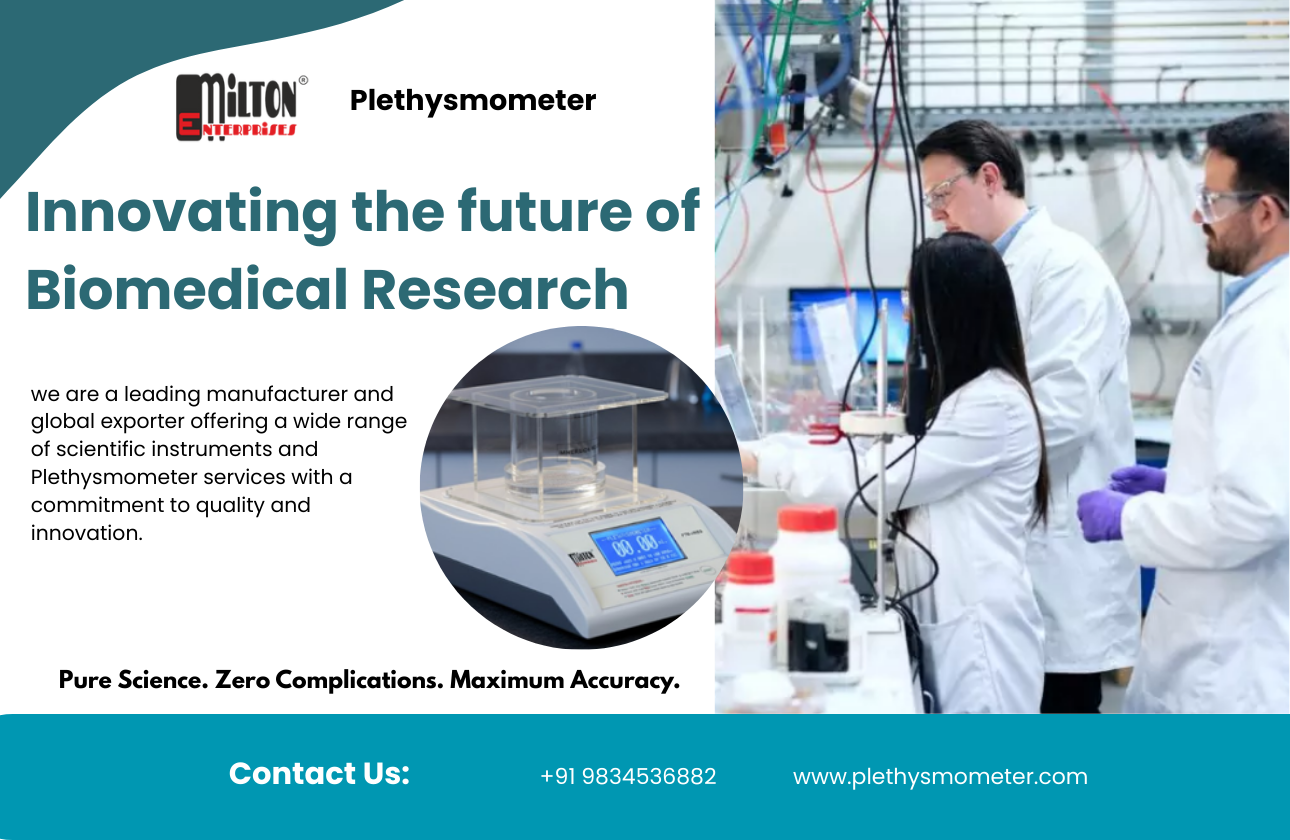
Introduction to Water Displacement Plethysmometer
The water displacement plethysmometer is a specialized device used in research to measure changes in volume, particularly in small organisms and their appendages. Its primary function is to detect minute changes in volume by immersing the subject in water. This tool is instrumental in research fields like pharmacology and zoology, where understanding minute volume changes can lead to significant discoveries. The precision and reliability of this method make it a favorite in many laboratories around the world.
How Does a Water Displacement Plethysmometer Work?
The basic principle behind the water displacement plethysmometer is simple yet effective. The device consists of a chamber filled with water where the object of interest, often a rodent's paw or a similar small sample, is submerged. As the object is immersed, it displaces a certain volume of water. This displacement is carefully measured and quantified to understand the exact volume of the tested object. The sensitivity of the water displacement plethysmometer allows it to measure very tiny changes, making it essential for accurate scientific assessments.
Applications in Scientific Research
The water displacement plethysmometer finds its niche in multiple scientific disciplines. In pharmacological research, it is primarily used to evaluate the efficacy of anti-inflammatory substances by observing changes in paw volume in response to different treatments in rodents. Similarly, in zoological studies, the device helps scientists to measure weight and growth changes in small animal populations. This device's ability to provide precise, repeatable results is why it remains a trusted choice for researchers globally.
Benefits of Using Water Displacement Plethysmometer
Several advantages make the water displacement plethysmometer stand out in research. Firstly, its accuracy and reliability are unmatched. The ability to detect minute volume changes is crucial for experiments where precision is necessary. Secondly, it's a non-invasive technique, meaning it causes no harm to live test subjects, thus maintaining ethical standards in research. Furthermore, the device's design ensures that operators without technical expertise can use it effectively, making it accessible and user-friendly.
Key Features of Water Displacement Plethysmometer
Among its key features, the water displacement plethysmometer boasts high sensitivity and quick performance, which are pivotal for real-time monitoring. Most devices are equipped with digital interfaces for easy reading and data recording. Moreover, they can often be calibrated for different specimen sizes, adding to their versatility. These features ensure the device is adaptable to a variety of research environments, enhancing its utility across various studies.
Maintenance of the Device
Proper maintenance of the water displacement plethysmometer is essential for accurate results. Regular cleaning of the chamber and careful handling to avoid wear and tear can prolong its usability. Calibration checks should also be conducted routinely to ensure the device remains precise. By adhering to these practices, researchers can guarantee the most reliable data for their studies.
Frequently Asked Questions
1. What is a water displacement plethysmometer used for?
Answer: A water displacement plethysmometer is primarily used to measure the volume changes in small rodents or similar specimens. It's vital in research settings where determining subtle volume changes can lead to conclusions about the efficacy of treatments or substances being tested.
2. How accurate is the water displacement plethysmometer?
Answer: It is highly accurate and provides precise measurements due to its ability to detect minute water displacement. Its precision makes it ideal for use in detailed scientific research.
3. How does it differ from other plethysmometry methods?
Answer: Unlike other methods that might measure air displacement, the water displacement plethysmometer uses liquid, which allows for the detection of smaller changes and offers more precise results without causing any harm to the test subjects.
4. Is the water displacement plethysmometer easy to use?
Answer: Yes, it's designed to be user-friendly. With basic training, researchers can quickly learn to operate the device and interpret its results accurately.
5. Can it be used in fields other than pharmacology?
Answer: Absolutely. While it's widely used in pharmacology, the water displacement plethysmometer is also applicable in zoology and other biological research fields due to its capability to measure small volume changes in various specimens.
Learn more about these devices and their application by visiting Water Displacement Plethysmometer. Additional resources can also be explored at Paw Volume Meter for Rodents and Digital Plethysmometer.