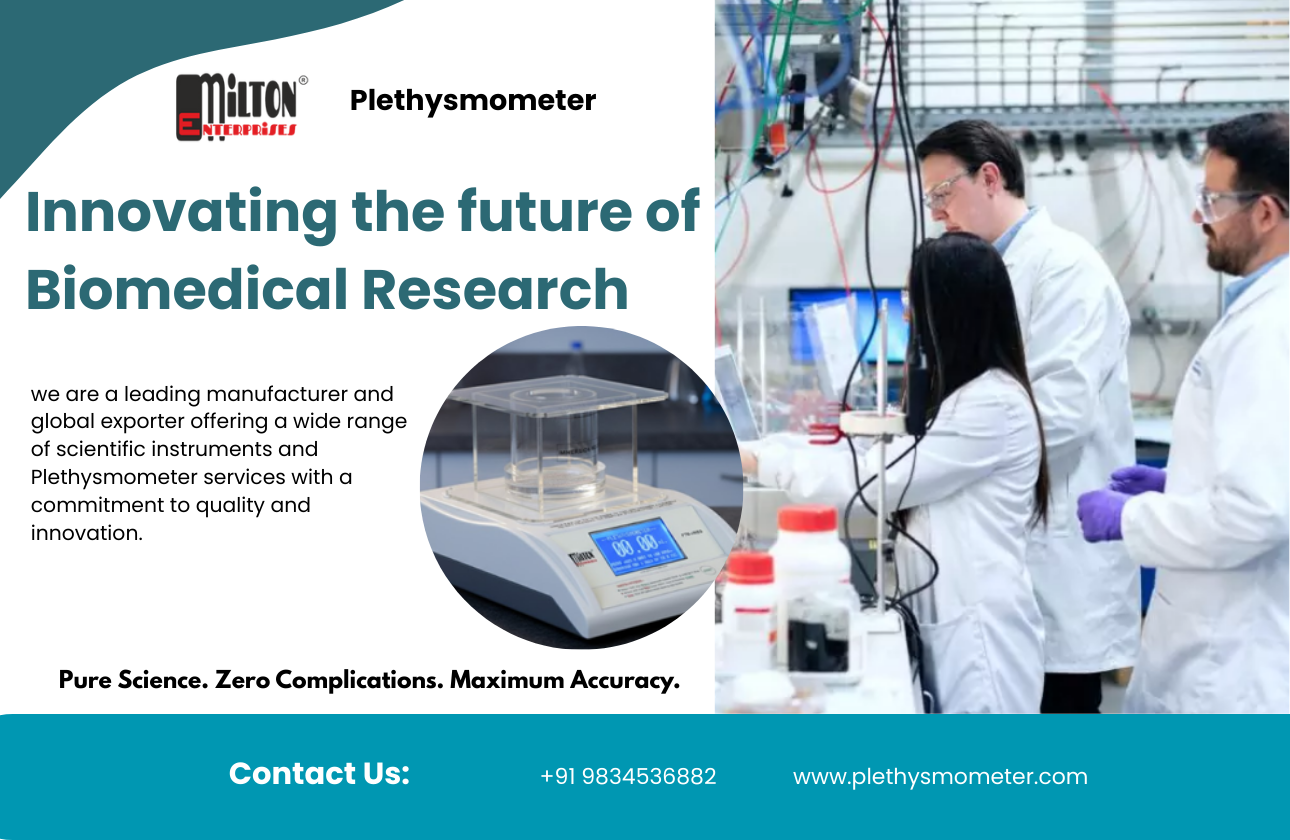
What is a Water Displacement Plethysmometer?
The term 'water displacement plethysmometer' might sound complex, but it's actually an interesting and essential tool in scientific research. Primarily used in research on animals, especially rodents, it's a device that helps measure the volume of a body part, like a paw, by using the principle of water displacement. When an object is immersed in water, it displaces a volume equal to the object's own total volume. This principle allows researchers to get accurate measurements of size changes in animal limbs. Such measurements are often used to study inflammation or edema. The tool is particularly beneficial because it's non-invasive, meaning it doesn't harm the subject being studied. By applying the simple scientific concept of water displacement, researchers can obtain vital data with precision. For anyone interested in the field of biomedical research, understanding how this device works is a fundamental step.
How Does a Water Displacement Plethysmometer Work?
Now that you know what a water displacement plethysmometer is, let's dive a little deeper into its workings. Imagine a small chamber filled with water. When you immerse an animal's paw into this chamber, the water level changes. This change in water level is then precisely measured. The amount of water displaced is directly connected to the volume of the paw. The plethysmometer comes equipped with sensors and meters that can record these changes accurately. These precise measurements can then be used to analyze the extent of edema or swelling. This device becomes incredibly useful in research settings where the swelling of animal limbs needs to be tracked over time. By consistently using the water displacement plethysmometer, researchers can follow the progression of treatments or disease effects quantitatively. The device’s accuracy ensures that minute changes in volume can be detected and recorded efficiently.
The Importance of Water Displacement Plethysmometry in Research
The significance of this tool in the field of research cannot be overstated. Studies pertaining to inflammation, pain, and treatment efficacy are reliant on accurate data. This is where the water displacement plethysmometer shines. Because it provides a non-invasive way to measure changes in volume, researchers can conduct longitudinal studies, observing changes over a period of time. This aspect is critical, as it facilitates understanding how different treatments affect swelling. Moreover, by providing consistent and reliable data, scientists can build upon their hypotheses with confidence. In research scenarios involving animals, minimizing stress and discomfort is crucial. The water displacement method meets these ethical considerations, offering a humane and efficient way of data collection. Researchers worldwide are increasingly relying on this tool not only for its accuracy but also for its ethical adherence in scientific studies involving live subjects.
Applications of Water Displacement Plethysmometer in Animal Studies
In the expansive field of animal research, the water displacement plethysmometer plays a pivotal role. Common applications include monitoring paw edema in rodents, often used as a model for human conditions like arthritis or other inflammatory diseases. By measuring changes in paw volume, researchers can infer the effectiveness of anti-inflammatory drugs or therapies. This application highlights the critical link between a scientific tool and its potential impact on human health insights. Additionally, the device can be used to explore pain mechanisms or effectiveness of pain management strategies in preclinical trials. With its reliable and precise measurements, researchers can better understand how different conditions affect animal models. These insights are invaluable in developing treatments and medications for human diseases. Its application is not just limited to inflammation studies; it extends to various other physiological and pharmacological research areas.
Advantages of Using Water Displacement Method
There are several advantages to using the water displacement plethysmometer in research. First and foremost, its non-invasive nature is key. Unlike other methods that may require incision or intrusion, the water displacement method allows for humane treatment of test subjects. This is particularly important in settings where ethical considerations are paramount. Furthermore, the device allows for the collection of quantitative data, which is consistent and replicable. This consistency means that researchers produce results that can be cross-referenced or compared across different studies with reliability. Moreover, the water displacement plethysmometer is relatively easy to use and does not require complex setup or extensive training, making it accessible to a wide array of research facilities. Its precision and ease of use make it a favored tool in laboratories around the world.
Challenges with Water Displacement Plethysmometry
While highly effective, the water displacement plethysmometer does bring along some challenges. One of the primary concerns is the potential for variable measurements correlated with temperature changes or evaporation within the chamber, which can impact the accuracy of readings. It's essential for researchers to calibrate the device properly before use and control environmental conditions closely to mitigate these effects. Another challenge is the sensitivity of measurements, which can sometimes be affected by user handling. This necessitates proper training to ensure consistent data acquisition. While these issues exist, they can be managed with careful use and understanding of the tool’s mechanics. Despite these challenges, the benefits of employing this method far outweigh the hurdles, especially when one considers its contribution to humane research practices.
Future Innovations in Water Displacement Plethysmometry
The future of water displacement plethysmometry is promising, showing potential for technological improvements. As the scientific community continues to seek higher accuracy and efficiency, innovations such as enhanced sensor technology and digital integration are on the horizon. These advancements aim to decrease manual errors and improve data quality. There is also ongoing research focused on integrating AI-driven solutions into plethysmometry. AI has the potential to enhance data analysis processes, allowing researchers to draw insights with unprecedented speed and accuracy. Additionally, smaller, more portable versions of these devices may soon become available, broadening their application in diverse settings. As technology progresses, the core principle of water displacement plethysmometry remains critically significant, ensuring these tools continue to offer substantial contributions to research.
Frequently Asked Questions
1. What exactly does a water displacement plethysmometer measure?
Answer: A water displacement plethysmometer measures the volume of an immersed object, such as an animal's paw, by evaluating the amount of water displaced when the object is submerged. This measurement is commonly used to assess changes in limb volume, especially in studies concerning swelling or edema.
2. How is the measurement done without being invasive?
Answer: This device relies on non-invasive techniques. By simply immersing the subject into a water chamber, there's no need for incision or any invasive procedures. The volume displaced by the immersion is measured, which keeps the procedure gentle and ethical.
3. Why is the water displacement method favored in animal research?
Answer: The water displacement method is favored because it provides accurate, reliable, and non-invasive measurements. It supports research protocols that emphasize ethical treatment and minimal stress for animal subjects, which is vital in scientific studies.
4. What kind of research is the plethysmometer instrumental in?
Answer: This tool is instrumental in studies focusing on inflammation, edema, and pharmacological testing. It provides quantitative data that are crucial for evaluating the effectiveness of treatments and understanding disease mechanisms.
5. Are there links to learn more about plethysmometry devices?
Answer: Yes, you can learn more from the water displacement plethysmometer resource, and other related plethysmometry tools.