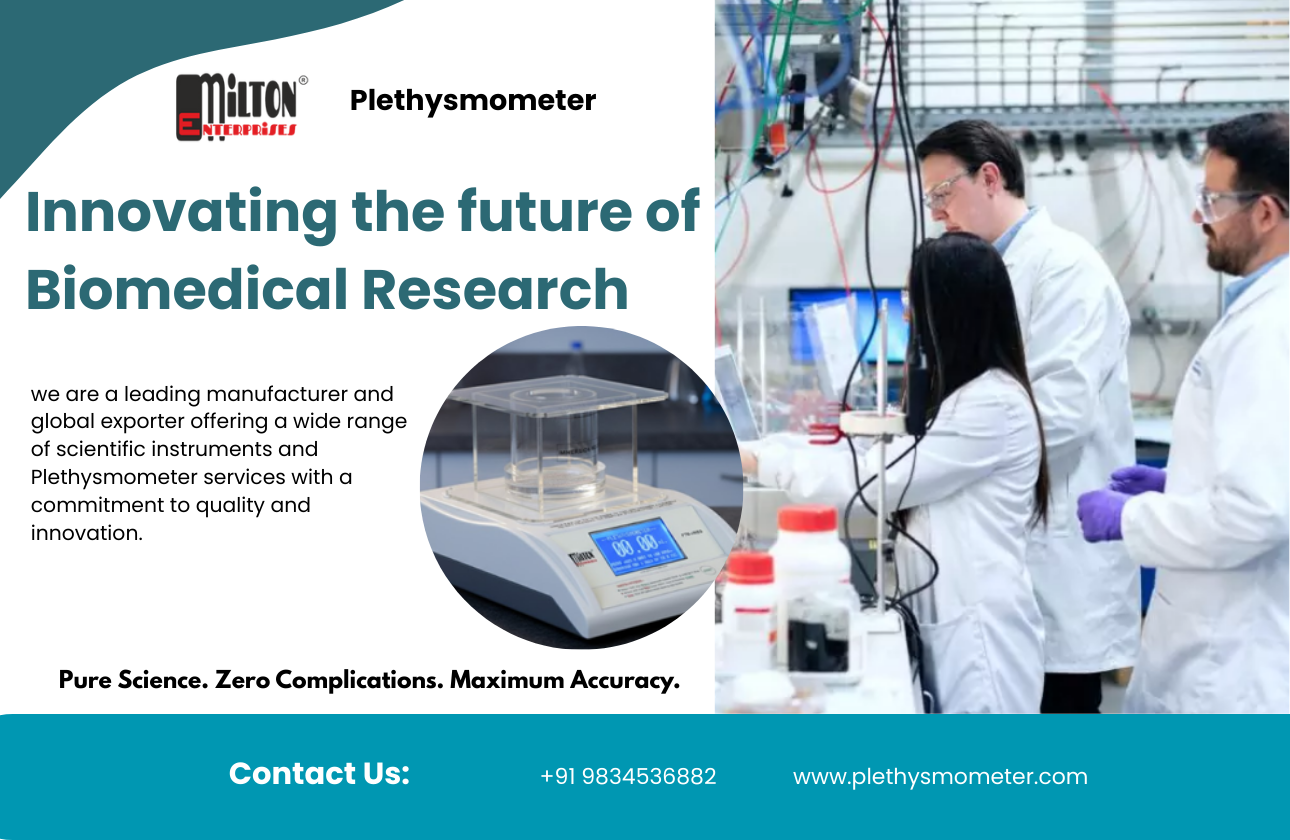
Understanding the Basics of Water Displacement Plethysmometer
Water displacement plethysmometer is a vital tool commonly used for various scientific research purposes. It primarily measures changes in volume, which is essential for research studies involving edema in animal models. This tool employs the principle of water displacement to provide precise data, making it a staple in many research laboratories. Understanding this plethysmometer's basic mechanism helps in appreciating its application and relevance in medical research and biotechnology.
The Functionality of Water Displacement Plethysmometer
The water displacement plethysmometer operates on a simple but highly effective principle. When a subject is submerged in water, the instrument measures the volume of water displaced, which correlates to the volume of the subject. This provides researchers with an accurate measurement of changes in volume, ideal for studying conditions like paw edema. The plethysmometer for lab equipment is user-friendly and offers accurate results, making it a preferred choice in many laboratories.
Applications in Research
This tool has a wide array of applications in various fields of research. Primarily, it is used in biological and medical labs for experiments related to inflammation and edema. The water displacement plethysmometer is invaluable in animal research, particularly for rodents, to measure and analyze edema progression effectively. More insights can be learned about its applications from the animal paw edema plethysmograph.
Advantages Over Other Technologies
One of the primary advantages of the water displacement plethysmometer is its accuracy and simplicity. Traditional methods might not provide the level of precision that this device does. Furthermore, it is non-invasive and convenient for subjects and researchers alike. Many laboratories prefer the water displacement plethysmometer for its precision and ease of use, making it a valuable addition even with the advent of digital technologies. Explore more about digital advances in the field here.
Comparing Water Displacement with Modern Plethysmometry Tools
In comparison with other modern research tools, the water displacement plethysmometer remains uniquely effective for specific applications. Digital plethysmometers incorporate advanced technologies, offering detailed data analysis and potentially simplifying some experimental procedures. However, for straightforward volume measurement needs, traditional methods such as water displacement still hold a significant advantage due to their reliability and cost-effectiveness. Additional comparison insights can be found in this guide.
Frequently Asked Questions
1. What is a water displacement plethysmometer?
Answer: A water displacement plethysmometer is an instrument used to measure changes in volume based on the displacement of liquid. It's particularly useful in research for evaluating edema in animal models.
2. How does it work in animal research?
Answer: In animal research, the water displacement plethysmometer measures the volume change when a limb or paw is submerged. This helps researchers track changes in inflammation over time.
3. What are the benefits of using this tool?
Answer: The primary benefits include accurate volume measurements, ease of use, and its non-invasive nature, making it particularly suited for delicate studies like those involving small animals.
4. Is it better than digital plethysmometry?
Answer: It depends on the context. For straightforward volume assessment, water displacement plethysmometry is often preferred due to its simplicity. However, digital plethysmometry may offer additional data processing and analysis features.
5. Where can I learn more about plethysmometer tools?
Answer: You can explore detailed information about various plethysmometry tools and their applications from trusted resources such as the Plethysmometer website.